Category: Uncategorized

  • How to Communicate in a Relationship: Why Understanding Matters More Than Being Right

    “Understanding is love’s other name.” — Thích Nhất Hạnh

    That need to be right…

    Most of us know that pull well, especially in close relationships. Wanting to prove our point or to “win” the argument.

    Many couples struggle with how to communicate in a relationship, especially during conflict. It’s easy to get pulled into trying to prove your point or to be understood first.

    But that’s often where things begin to break down. You want your partner to understand what really happened and to see it the way you see it. The only thing is, oftentimes, they’re trying to do the same thing also.

    The Trap of Being Right

    However, trying to convince your partner of “what really happened” rarely brings you closer and in fact can be a recipe for creating more distance.

    The truth is, two realities can exist at once. When the agenda becomes about convincing one another, distance follows.

    Shift happens

    One of the most meaningful shifts you can make is this:

    Moving from, “How do I show them I’m right?” to, “Help me understand.”

    Research from The Gottman Institute shows that around 69% of problems in relationships are actually perpetual. What does this mean? It means many couples are most likely having the same argument over and over again.

    If the goal is to solve the problem once and for all, you may stay stuck. But when the goal shifts to understanding, something begins to change.

    What Understanding Can Sound Like

    This can be as simple as:

    • “Help me understand.”
    • “Tell me more about that.”
    • “I’d like to understand how you saw it.”
    • “Thank you for sharing that with me.”

    Understanding is love’s other name.

    Understanding means being willing to stay curious about your partner’s perspective and the values underneath the issue that matter to them.

    The simple practice of shifting from proving your point to understanding begins to move things toward repair. And yes, it’s easier said than done. But like all things its a practice and so breaking the habit may take some time.

    An IFS Lens: What Part Is Showing Up?

    From an Internal Family Systems perspective, what you’re hearing in conflict is often a part of your partner speaking.

    Maybe a protective part, a part that feels hurt, defensive, or misunderstood.

    When you can get curious, you might begin to wonder:

    • What is this part trying to protect?
    • What is it needing right now?
    • Why is it showing up in this moment?

    You can also turn that same curiosity inward:

    • What part of me needs to be right right now?
    • What is it trying to protect?

    A Practice to Try: Responding vs Reacting

    The next time conflict arises, try taking a moment to pause, take a breath, and say, “Help me understand.”

    It’s a small shift, but it changes the direction of the conversation and over time that shift matters more than being right.

    These moments of repair can be seen as making deposits to the relationship’s emotional bank account. And ultimately, repair is what builds trust.

    Work With Me

    If you’re finding it hard to shift these patterns on your own, couples therapy can help you communicate more effectively and feel more connected.

    I offer Gottman and IFS Informed couples therapy for clients across California. Reach out for a free consultation.


  • Your Destiny Is to Evolve: A Practice to Reconnect with Who You Are and Who You’re Becoming

    Your Destiny Is to Evolve: A Practice to Reconnect with Who You Are and Who You’re Becoming

    I believe we’re all on a journey of becoming wiser human beings—learning, growing, and transforming through the experiences life places on our path. As the saying goes, “We can’t stop the waves, but we can learn how to surf.”

    As a therapist, I draw on both my teaching and counseling experience to help people become more skillful at riding those waves. The journey often begins with telling your story. But something I’ve noticed is that when people share their stories, they often leave out one really important part: their strengths.

    In my work with clients, I often invite them to sit with two simple yet revealing questions:

    • What are four things you know to be true about who you are today that you feel proud of?
    • What are four qualities or ways of being you’re stepping into—your future self calling you forward?

    We’ve all heard about the power of affirmations. But instead of repeating something you hope will feel true, this practice invites you to name what already is—and what’s quietly emerging.

    This kind of self-reflection can be especially powerful during times of grief, transition, or change—moments when our sense of identity feels shaky or forgotten. Naming what’s true about who you are right now is like anchoring yourself in the storm. And the more we practice self-awareness, the more self-love can begin to take root.

    Here are a few examples:

    • I know I’m someone who shows up with care, even when it’s hard.
    • I know I’m someone with a good sense of humor.
    • I’m stepping into someone who speaks her truth more often.
    • My future self is confident and glowing.

    This practice reminds us that our future wise self is already within reach—cheering us on, applauding our emergence.

    The beauty of this is that in moments of uncertainty, you don’t need to have it all figured out to know what matters to you.

    Try This Today:

    • First, check in with yourself: Where are you on a scale of 1–10?

    (1 = depleted or anxious, 10 = grounded and centered)

    • Then ask:
      • What are four things I know to be true about myself that I’m proud of?
      • What are four things I’m stepping into?
    • Afterward, check in again: Did anything shift for you just from naming those truths?

    This is one of my favorite practices to share with clients. It may seem simple, but I’ve seen how powerful it can be. The act of naming your strengths, not to prove anything, but to remember what’s already true—can shift how you relate to yourself and your path. It’s a simple practice, but one that leads to real change.

    I believe growth isn’t about becoming someone else. It’s about remembering who you already are—and letting that version of you lead more often.

    Inspired Reading & Resources:

    This practice is inspired in part by the work of Dr. Rick Hanson and Amy Cuddy—both of whom explore how cultivating inner strengths and embodied awareness can shift how we relate to ourselves and the world around us.

    Dr. Rick Hanson – Neuropsychologist and author of Hardwiring Happiness and Resilient, Dr. Hanson explores how we can internalize positive experiences to rewire the brain for greater inner strength, calm, and resilience.

    Amy Cuddy – Social psychologist and author of Presence, Amy Cuddy’s work highlights how posture, body language, and self-affirmation can increase our confidence and help us step into our power—especially in moments of transition.

  • When You’re Caught in the Wave

    When You’re Caught in the Wave

    Sometimes when you’re in it, whether it’s an intense wave of grief, anxiety, or conflict, it can feel like too much. Like life has knocked you off your board and you’re getting pummeled by a wave.

    As a new surfer, this is one of my biggest fears in the water. That washing machine feeling of being tossed around, disoriented, and unsure which way is up. And yet, somehow, I’ve managed to my find way back to the surface. In the ocean and in life.

    There’s a practice I really love that I often share with clients.

    Imagine your life is a movie. And whatever’s happening right now, (maybe a fight with your partner, burnout from work, or helplessness around a family member) that’s what’s playing on the screen.

    Now picture yourself in the theater lobby. You’re cracking the door open, popping your head in to see what’s unfolding. But from where you are, you feel okay. You’re no longer caught inside the scene. From where you are, there’s space. And with that space comes a new perspective.

    This is the moment things get to shift. You realize you’re not just in the movie, but you also get to play director. The scene is about to change, and you have the ability to decide what’s next.

    But before the next scene begins, you ask yourself, “What’s this part of the movie trying to show me?”

    Because every movie has a message. Oftentimes, the heart of the story lies in how we move through the hard parts and how we choose to respond.

    A simple example of this might be a character who’s burned out, working long days, carrying an unconscious pressure to keep pushing. But once she realizes what’s playing on the screen, the scene can shift. Maybe in the next one, she’s lying in a garden, basking in the sun. Together, we explore what’s keeping her from the garden, and begin the work of dismantling those barriers.

    When you create space to reflect on your role in the movie, you begin to remember you get to also take role as director and have the power to change the narrative.

  • Heart is Boss

    Heart is Boss

    Wow. What a wild, lovely, and heart-opening year it’s been.

    The decision to pack up my things in my Santa Monica bungalow into a storage unit, and to put my life there on pause to set off to travel — wasn’t one I made lightly. It was something I sat with for over a year. When people ask me why, my first response is often why not? But the truth runs deeper: everything comes back to values…

    I believe in living a life aligned with what matters most. For me, that means honoring my love for travel, growth, and adventure. After years of living out the California dream, those values started to speak louder — and I listened.

    I’ll never forget what a teacher once told me during my Ayurvedic training: “Heart is boss.”

    Sometimes, the practice is learning to bow our heads to our hearts. And I’m so glad I did.

    While I miss my friends, my community, and my Pilates and Reiki clients back home, this journey has been nothing short of incredible. Solo traveling through Asia hasn’t always been easy — especially with a 12-hour time difference from loved ones. But it’s deepened my capacity for inner resourcing and reminded me just how much I can hold.

    As I complete another solar return, I’m reminded again and again: heart is boss.

    Last night I had dinner with a friend and opened up my camera roll to share some videos of monkeys I took in Sri Lanka. Scrolling through, there was a moment of awe and gratitude. Has this really been my life these past few months?

    This year asked me to trust myself more deeply. I traded comfort for curiosity and found myself in places I never imagined. While I am not exactly sure what lies ahead after my slow travels in Indonesia, I do know this:

    When I follow that voice within, I’m always guided. I’m always supported. I’m always home.

    Here’s to another year of living from the heart, wherever it takes me.

  • The Grief We Carry

    The Grief We Carry

    Grief is not a probelm to be solved. It’s a presence awaiting witnessing.” -Francis Weller

    The past couple of months, I’ve been leaning more deeply into grief work, both professionally and personally.

    On some level, we are all grieving.

    Maybe it’s the state of the world we thought we’d be living in.

    An unlived dream.

    Leaving a city you once called home.
    The end of a relationship you thought would last.
    Letting go of a job you held for years.
    The loss of a loved one.

    Grief isn’t always obvious. Sometimes it’s subtle. Unnamed and in the spaces between chapters, in the ache of what could have been, or in the slow unraveling of what once was.

    So often, I hear clients say they don’t want to engage with grief for fear they won’t stop crying, or that they won’t come back.

    It can feel like a bottomless pit.
    But the paradox is if we don’t engage with it, we may never fully return to ourselves.

    Grief pulls us out of our center. Out of control.
    Francis Weller says it invites us to the edge of sorrow.

    And while that place is scary, it’s also sacred.
    It’s where the soul feels most alive.

    Tending to grief is like hygiene for the soul.

    While loss happens to us, how we grieve is up to us. Grief doesn’t demand us to do it alone.

    Instead, it asks for containment.

    And when it’s shared in circle, we begin to create a bottom to it, so it no longer feels like free fall.

    In community, grief can be met, witnessed, and slowly tended to.

    If you’re longing for a space like that, I hold an open and ongoing virtual grief group.

    Reach out if you’d like to learn more.

  • Fierce Compassion and Shamanic Healing: A Therapist’s Journey in Bali

    Fierce Compassion and Shamanic Healing: A Therapist’s Journey in Bali

    Don’t expect shamans to ask how you’re feeling. They’re not there for that.
    They’re here to shift energy—to notice what’s stagnant and help it move.

    Sometimes that happens in a single session. Sometimes it takes more.

    This past Monday, the day after the new moon, I experienced a two-hour Balinese healing ceremony with a local priestess named Ibu Jero. The first hour was a mix of massage and energy healing. Then came the sound bath.

    I’ve had many sound bath experiences, but none quite like this. Ibu placed singing bowls directly on my body and began to fiercely strike them. It wasn’t soft or sweet. There was no trauma-informed explanation, no quiet introduction. Just fierce compassion and deep resonance.

    After my initial “What the hell did I sign up for?” moment, I started to smile. The sound of the gong felt like a brain cleanse—if the mind is a cave full of bats, the gong leaves no bats behind.

    The Water Purification Ritual

    Afterward, Ibu handed me a sarong and told me to meet her next to the temple for a melukat, a traditional Balinese water purification ritual. A stone basin filled with water and flower petals waited for me.

    Ibu asked me to think about what I was ready to let go of.

    She then began to throw water at me….like a deep soul cleanse. I couldn’t fight back. I could only surrender.

    At times I couldn’t breathe. I swallowed water. I felt physically vulnerable…
    And then with emotional vulnerability also arising, came the emotional release.

    She looked at me, smiled and said, “Okay.” As if her work here was done. But that’s when more energy began to shift… and more water emerged, but this time in the form of tears.

    I cried. She hugged me. And it was exactly what I needed:
    To be held.
    To be witnessed.
    To be seen and supported.

    I walked away from the session literally drenched, but feeling lighter.

    A Holistic Approach to Emotional Health

    As someone who walks this path alongside my clients, I’m reminded again of something I once heard:

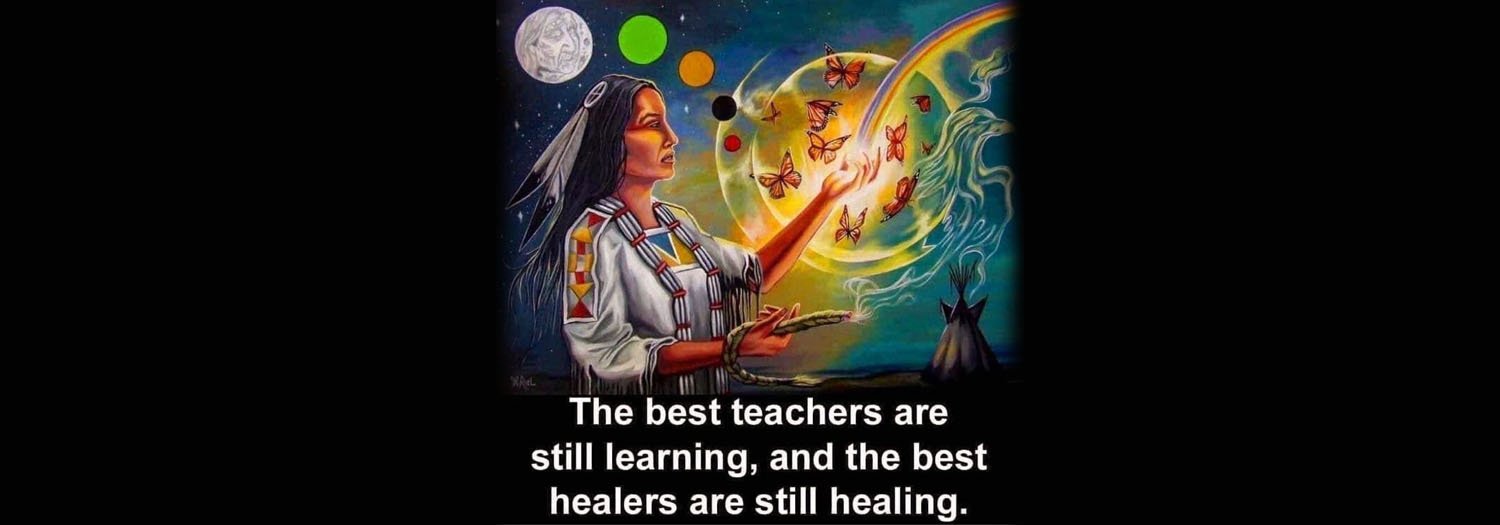
    The best teachers are still learning.
    The best healers are still healing.

    I’m not sharing this story to say everyone needs water thrown in their face.
    I’m sharing it because I believe in a holistic and integrative approach to emotional health and healing.

    Just like physical fitness involves strength training, rest days, and yoga, emotional healing also needs variety. Some days we talk it out. Some days we rest. Some days, we turn to ceremony, community, or ancestral practices.

    In my work as a therapist and psychedelic integration guide, I draw from Internal Family Systems (IFS), Narrative Therapy, and mindfulness-based practices. But I also honor the healing that comes through energy work, somatic experiences, and ritual.

    Healing is layered. Sometimes it’s messy and loud. Other times it can be still and quiet.

    But it’s all part of this mysterious, beautiful journey we call life.

  • Coming Home to You

    Coming Home to You

    “When are you coming home?” A question I’ve been asked a lot lately…

    Four months ago, I left for a solo adventure through Asia. I wasn’t searching for anything in particular but what I found has been more valuable than anything I could’ve planned: a deep sense of inner belonging.

    There have been many temporary “homes” along the way, and it’s not always easy to feel grounded. But through it all, I’ve come to realize — home isn’t a place. It’s a feeling that lives within you.

    One of the most powerful discoveries on this journey has been the concept of inner resourcing — the ability to draw from moments of peace, awe, and connection within ourselves, especially when the outside world feels uncertain. It’s a tool for building emotional resilience, calming stress and anxiety, and fostering self-trust.

    I began my trip in Nepal, where I was talked into a five-day trek along the Himalayas. Each morning, I woke up to witness the sunrise with the mountains in the background — and I was in such a state of awe and happiness. Another unforgettable moment was riding around the beautiful Phewa Lake in Pokhara on the back of my tour guide/friend’s motorcycle. I never imagined something so simple could bring me such pure joy. It might have been one of the happiest moments of my life — maybe the happiest I’ve ever been. These are my inner resources — vivid memories and feelings I can return to anytime I need grounding or support.

    And that’s exactly what I want to offer: a space for like-hearted women to reconnect with themselves and each other.

    Starting this May, I’m hosting a 6-week women’s circle — Coming Home to You — filled with guided mindfulness meditations, Internal Family Systems (IFS)-inspired reflections, and practices that help you cultivate your own inner resource. Together, we’ll explore how to feel more at home in your body, mind, and heart… wherever you are in the world.

    If you’ve been feeling disconnected, overwhelmed, or longing for more grounded connection, this group is here for you. Join a like-hearted community and explore how mindfulness for women, parts work therapy, and somatic practices can support your journey back to yourself.

    If something in this post resonated with you, it might be the perfect time to reconnect.
    Coming Home to You begins Wednesday, May 21- a six-week journey of mindfulness, reflection, and community. Click here to learn more or reserve your spot.